Guide
Fence buying guide
How to choose the right fencing for your land, factory or farm: the main types of fence, what mesh size, wire gauge and height to pick, and how many rolls to order.
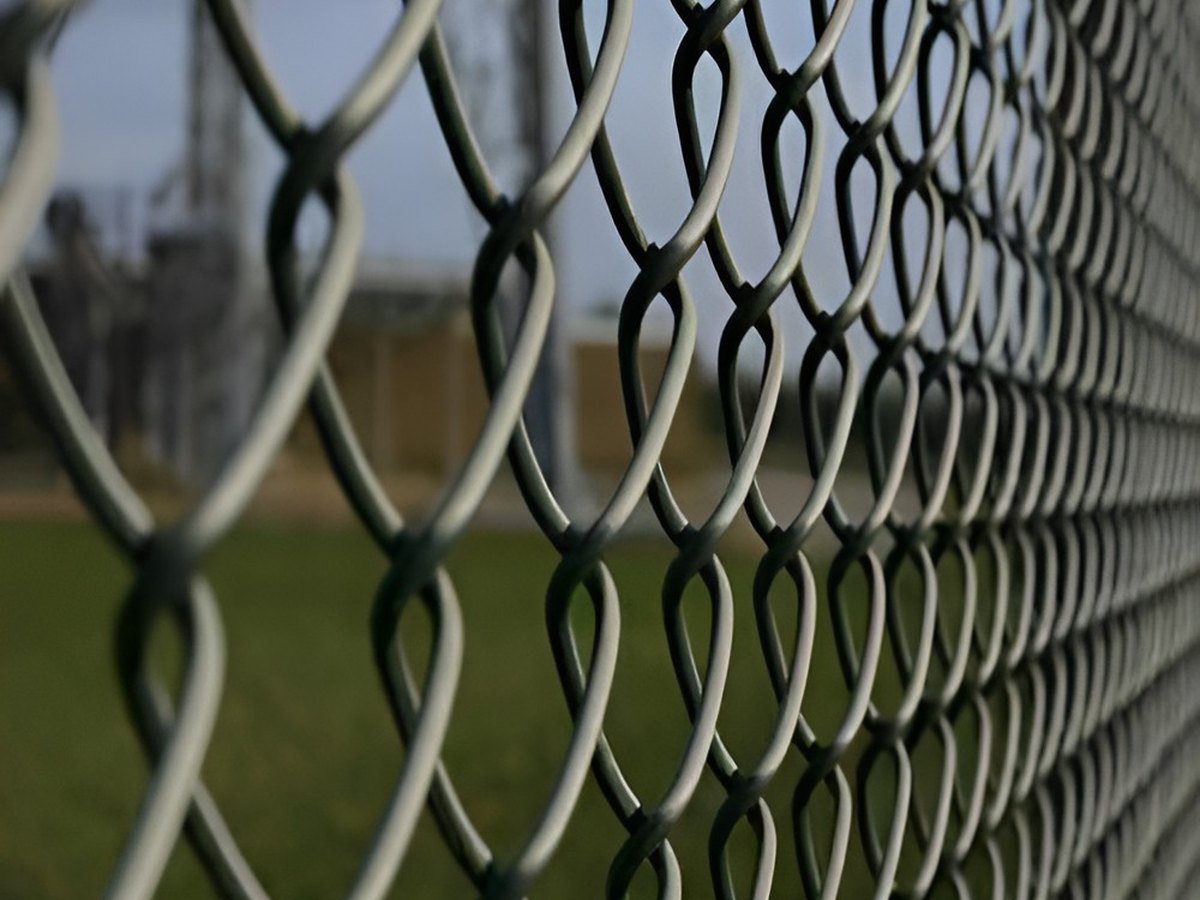
1. Types of fencing and what each is for
Most boundaries in India are built from one of six wire fencing types, often combined: chain link or weld mesh for the main fence, with barbed wire or concertina coil on top for security.
| Fence type | What it is | Best for |
|---|---|---|
| Chain link fence | Woven diamond mesh. Strong, flexible, see-through and the best value per metre. | Plots, factories, schools, farms, sports courts |
| Barbed wire | Twisted line wires with four-point barbs, strung in lines between posts. | Farm boundaries and topping walls or fences |
| Concertina coil | Razor-bladed spiral that opens into a deep barrier. | Power plants, defence, prisons, high-security sites |
| Weld mesh | Wires spot welded at every crossing into rigid, even panels. | Neat boundaries, enclosures, machine guards |
| Knotted fence | Woven wire locked with a knot at each joint, holds tension. | Cattle, goats, plantations, long rural runs |
| Chicken mesh | Light hexagonal netting, easy to cut and shape. | Poultry, gardens, nurseries, small animals |
2. GI or PVC coated?
GI (galvanized iron) wire is coated with zinc, which protects the steel from rust. It is silver in colour and is the practical, lower-cost choice for factories, farms and most outdoor boundaries. See GI chain link fence and GI barbed wire.
PVC coated wire adds a plastic layer over the wire. The extra layer resists moisture and weather, which helps in coastal, humid or high-rainfall areas, and the green finish looks neater around homes, campuses and gardens. See PVC coated chain link fence and PVC barbed wire.
3. Mesh size, wire gauge and height
Mesh size
The mesh size is the width of each opening. Small openings (1 to 2 inch, 25 to 50 mm) are harder to climb and keep out small animals. Large openings (3 to 4 inch, 75 to 100 mm) use less wire, so they cost less for long field boundaries.
Wire gauge
Wire is sold by gauge (SWG) or by diameter in millimetres. The lower the gauge number, the thicker the wire. Thicker wire is stronger, harder to cut and lasts longer.
| Gauge | Diameter |
|---|---|
| 6 SWG | 4.88 mm |
| 8 SWG | 4.06 mm |
| 10 SWG | 3.25 mm |
| 12 SWG | 2.64 mm |
| 14 SWG | 2.03 mm |
| 16 SWG | 1.63 mm |
Height
As a general guide: 4 to 5 ft for farms, gardens and poultry; 5 to 6 ft for house and plot boundaries; 7 ft or more for factories and security perimeters, usually topped with two or three lines of barbed wire or a concertina coil. We make chain link up to 15 ft high.
4. How many rolls do I need?
Enter your boundary. The calculator uses our roll sizes: chain link and weld mesh rolls are 15 m long, a barbed wire roll is 30 kg (18 to 40 ft per kg depending on gauge), and a concertina coil covers 6 m.
Estimates only. Barbed wire length per kg varies by gauge; we confirm exact quantities with your quote.
5. Posts and installation basics
Wire fencing hangs on posts, usually concrete, GI pipe or angle iron. Posts are commonly spaced about 2.5 to 3 m apart, with stronger corner and end posts braced against the pull of the wire. Chain link is stretched between the end posts and tied to line wires at the top, middle and bottom, so it stays tight. On top of a fence or wall, barbed wire or concertina coil is fixed on angled arms or brackets.
For long rural runs, knotted fence holds its tension over longer spans. For neat, rigid sections around homes and gardens, weld mesh is easy to fix in panels.
Prefer us to put it up? See our fencing work in Coimbatore.
6. Getting an accurate quote
To price your fence quickly, send us:
- Total boundary length, or plot length and width
- Height you want
- Mesh size and wire thickness, if you know them
- GI or PVC coated
- Delivery location
Want to make chain link yourself? Compare our chain link fencing machines, from the ₹1,20,000 manual machine to the fully automatic line, or read how to start a chain link fence making business.
Fencing questions, answered
What is the best type of fence for a plot boundary?
Chain link fence is the most common choice: it is strong, quick to install and costs less per metre than a wall. Add two or three lines of barbed wire on top if you need extra security.
How many chain link rolls do I need?
Our chain link rolls are 15 metres long. Divide your boundary length in metres by 15 and round up. A 60 m by 40 m plot has a 200 m boundary, which needs 14 rolls.
What height of fence do I need?
As a general guide: 4 to 5 ft for farms and gardens, 5 to 6 ft for house and plot boundaries, and 7 ft or more with barbed wire or concertina coil on top for industrial and security perimeters.
GI or PVC coated fence, which lasts longer?
PVC coated wire has an extra protective layer over the galvanized steel, so it resists weather better, especially in wet or coastal areas. GI is the practical, lower-cost choice for most industrial and farm boundaries.
Which wire gauge is strongest?
The lower the gauge number, the thicker and stronger the wire: 8 gauge (about 4 mm) is much stronger than 14 gauge (about 2 mm).
Where can I buy fencing in Coimbatore?
No.1 Fence manufactures chain link fence, barbed wire, concertina coil and wire mesh at 2036, Trichy Road, Singanallur, Coimbatore, and delivers across India. Message us on WhatsApp on +91 97900 00999.
Fencing manufacturer in Coimbatore
No.1 Fence makes chain link fence, barbed wire, concertina coil, wire mesh and fencing machines at Singanallur, Coimbatore, and delivers across India.